Housing First: An Effective way to Reduce Homelessness

Housing provides the foundation for growth and has been at the centre of human needs since the beginning of time. It is no coincidence that it is included at the base of Maslow’s famous “hierarchy of needs”. Humans have been in the market for housing, through rent or purchase, since at least the time of the Roman Empire. In the years since, we still have to manage a way for everyone to be in housing. Homelessness is still a prominent feature of the streets we roam and affects hundreds of millions of people globally. The stark contrast between high rise development and expensive shopping streets in West London and people suffering in the cold winter months is a bizarre reality. This phenomenon is not limited to the English capital, but is a commonplace finding across the world. Housing first is a relatively new way of approaching homelessness that is effective and human-oriented.

Throughout recent history the world has enjoyed strong long-term growth and it is expected to continue in this trend. This growth has led to innovation, technology, increased welfare and many more benefits. However, the same long-term growth has been plagued by short-term periods of economic decline. Think of the Great Depression in the 1930’s, the oil shocks in the 1970’s, the dot-com bubble in the early 2000’s and the financial crisis in 2008. These periods of boom and bust are rather cyclical in nature, as was observed by American economist Hyman Minsky. What is important to note is that growth is not linear and is impaired at intervals by short-term periods of recession. During these periods of recession the most vulnerable members of society take a hit, causing homelessness to soar.

In Western countries the pandemic has contributed to an ongoing increase in homelessness. In England the number of homeless is set to jump by a third in 2024. In the United States homelessness grew even before the pandemic for four straight years. The pandemic put an even greater strain on people already struggling with high rent due to urbanisation and a focus on high-end developments, instead of affordable housing. Homelessness can often lead to several other issues like crime, drugs and alcohol abuse and psychological damage. Homelessness has been tricky to eradicate, since there are so many aspects that need to be tackled. The housing first method, developed in 1992 by Dr. Sam Tsemberis, has been a revelation.
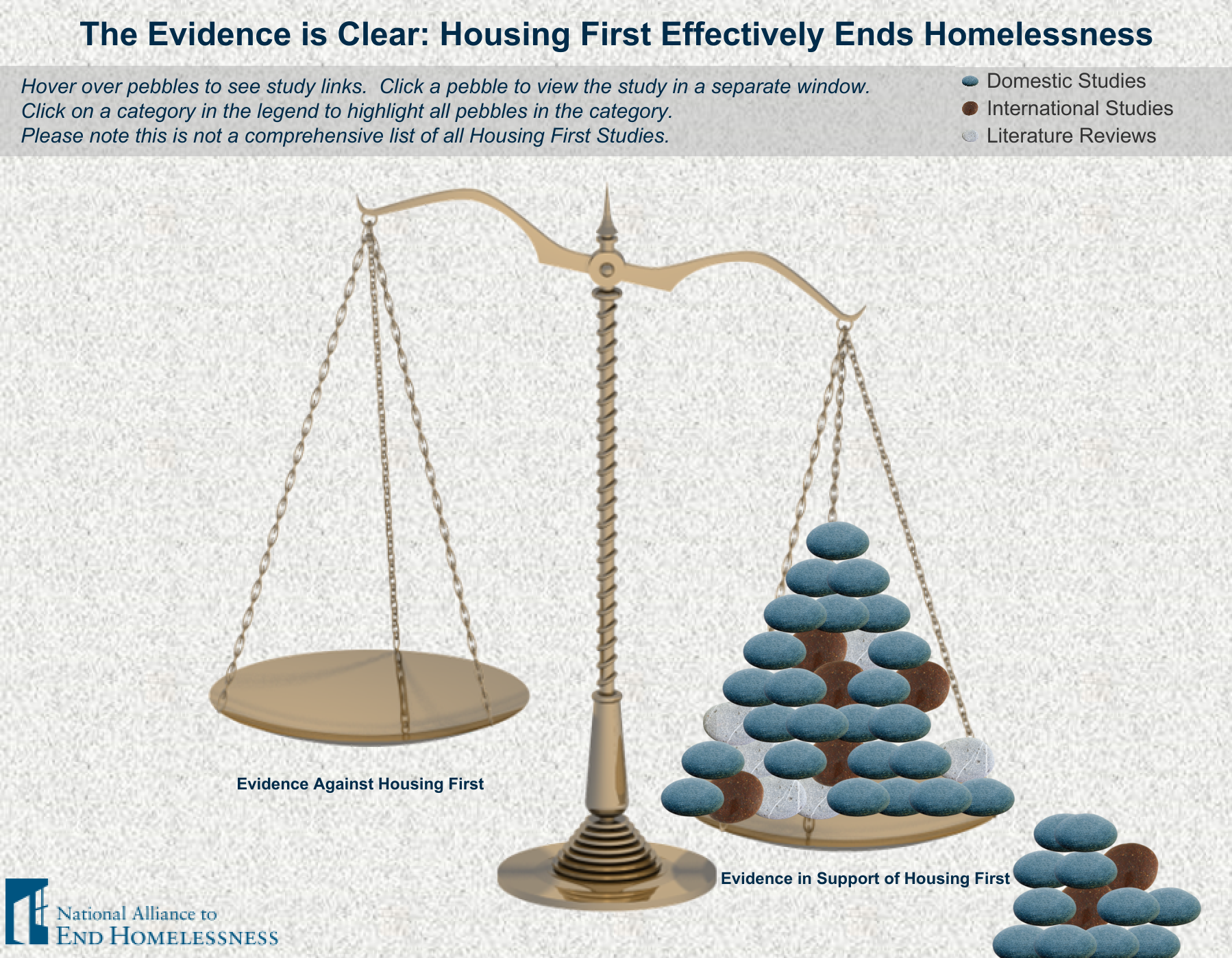
Source: National Alliance to End Homelessness
Housing first is a model which insists on providing supportive housing to homeless people struggling with mental health. In the graphic above, the National Alliance to End Homelessness shows us that housing first is well researched and quite successful. On their page the same image can be found and by clicking on each individual pebble one is redirected to the relevant study. Housing first allows people to work on their problems, with the help of external support, without the pressures involved in living on the streets. Setting up a housing first programme is not straightforward and does take careful handling, however, in the long-term it increases welfare. In the meantime countries could follow France’s lead, by banning evictions during the cold winter months, bringing compassion to the holiday season.